We have some cute kids.
We were giving Ethan a hard time because he didn't have a tie on for Church. He sent us a picture to prove that he did have one on.


I am glad we get pictures from them.

We have some cute kids.
We were giving Ethan a hard time because he didn't have a tie on for Church. He sent us a picture to prove that he did have one on.
I am glad we get pictures from them.
Courtney's ward had a temple trip and Courtney went along. She had a great time. The temple is about 2 hours one way so they went early so they could eat at Kneaders and shop at Trader Joe's. They took a group picture afterward. They all look great!

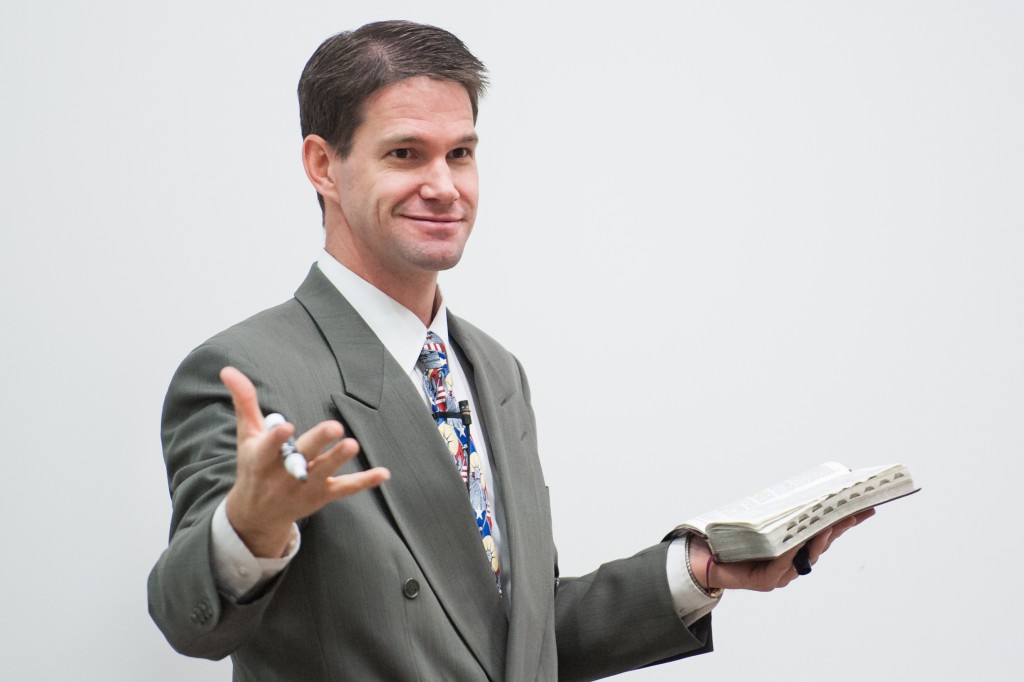
One of religious studies professor Tyler Griffin’s first teaching experiences was in middle school, where he gave a history presentation that went a little longer than his teacher probably expected.
“I just dove in and studied and was so excited about it,” Griffin said. “(I) got like a fourth of the way through my presentation when the time ran out and the teacher said, ‘Hey, we’re gonna continue this. You’re gonna keep going next time.’ It filled another whole class period and I walked away from that going, ‘Wow, that was a lot of fun.’”
That was the first time Griffin thought about teaching as a career, he said. He found he enjoyed both studying and engaging with the classroom.
Griffin, now an associate dean of Religious Education at BYU, said his goal since high school was to be a seminary teacher.
Due to the high number of people wanting to be seminary teachers at the time, the Seminaries and Institutes of Religion preservice director in Logan suggested he get a degree in something that could provide for his and his family’s needs just in case, Griffin said.
“Electrical engineering was actually my plan B … in case seminary, which was plan A, didn’t work out,” he said.
Griffin, born and raised in Providence, Utah, served a mission for The Church of Jesus Christ of Latter-day Saints in Curitiba, Brazil, according to his Religious Education Department biography. He also studied electrical engineering at Utah State University. However, he knew his end goal was to teach seminary.
“Electrical engineering is not a simple program but I loved it. My head was in that program. I loved it, but my heart was in the classroom,” he said.
The opportunity to teach in a classroom came as a choice between an electrical engineering job and a job teaching seminary. Griffin chose seminary.
Griffin first taught seminary in Brigham City and later institute in Logan, adjacent to his alma mater, Utah State University. He began teaching at BYU in April 2010, according to his biography.
Griffin leverages his training as an engineer in his approach to scripture study.
“It's actually kind of transferred over to how I engage with the scriptures. I want there to be a logical flow,” he said. “It kind of modifies how I see them, how these doctrines line up and connect, kind of in an electrical engineering circuit, if you will.”
Students find the same logical, in-depth scripture study in Griffin’s classes. As of Winter Semester 2024, Griffin teaches the courses Jesus Christ and His Everlasting Gospel, and Teachings and Doctrines of the Book of Mormon.
According to Griffin, there are three dimensions of scripture study and understanding all three is important to understanding the scriptures as a whole.
“The three dimensions are the world that lives underneath the scriptures, underneath the text; the world that created the scriptures. Then, there’s the world that lives on the scripture page. And then, there’s the words above the scripture page where you and I live. And that’s the application,” he said.
Understanding these dimensions is especially important when reading harder-to-understand chapters such as Jacob 5, the longest chapter in the Book of Mormon, Griffin said. Students in professor Griffin’s Book of Mormon class use this three-dimensional approach to better understand and apply such chapters.
While it may be difficult to understand right away, understanding comes with effort, Griffin said.
“It’s fun to roll up your scriptural sleeves and dig in, dive in, swim around in the scriptures and in the doctrines and try to make sense of them. And it’s okay if it doesn’t make perfect sense right now. It’ll come,” he said.
Students who have interacted with Griffin, both in and out of the classroom, shared the impact he has had on them. Aneisha Booth, a BYU student who previously took Griffins’s Book of Mormon class, said she appreciated his three-dimensional scripture teaching method.
“The reason the applications (of lessons) were so good is that he builds up the context and the actual words so well, and then he applied the scriptures in ways that I had never thought of before,” she said.
When Jonathan Young, a family life student, was trying to decide if a career path in religious education was for him, he said Griffin was willing to help out.
“The biggest thing that stands out is just like his willingness to take time for some student that wasn’t his and that like didn’t know him, you know, and just to help out and answer some questions for me,” Young said.
As for what he hopes his students get from his classes and their study of the scriptures, Griffin doesn’t just want them to leave having learned a few dates, facts or figures, he said. Instead, he wants them to leave having developed “enduring discipleship” to Jesus Christ.
“What I really want is not for them to sit there and try to figure out how to answer my questions,” he said. “But for them to sit there and learn how to answer their questions and how to connect with the Savior.”
Griffin hopes the principles students learn in his class stay with them for the rest of their lives, he said.
“The hope is their minds and their hearts are drawn heavenward and learning to love God learning to become more like the Savior … and to be able to resolve all the doubts, all the concerns, all the questions over time that may surface with regards to the Church or doctrine or history or social issues or political issues or any of the things that we face in our in our modern world.”
Professor Griffin hosts several podcasts, which can be found on Book of Mormon Central. He is also the author of the book “When Heaven Feels Distant.”
Our stake was in charge of the youth stake dance. Since it was already going to be decorated, the stake presidency decided they should hold a stake adult dance the day before the youth dance. Bryan and I decided to check it out. There weren't a lot of people there but we stayed, chatted, danced a bit, and then left early. It was fun but not really our scene.


Courtney wanted to get her taxes done quickly so she called me and we did them over Facetime. She logged in and asked me questions while she filled everything out. She didn't make a ton but she was hoping she would get most of her taxes back. When she finished and saw how much her reimbursement would be, we had a good laugh.

By Ethan Pack February 20, 2024
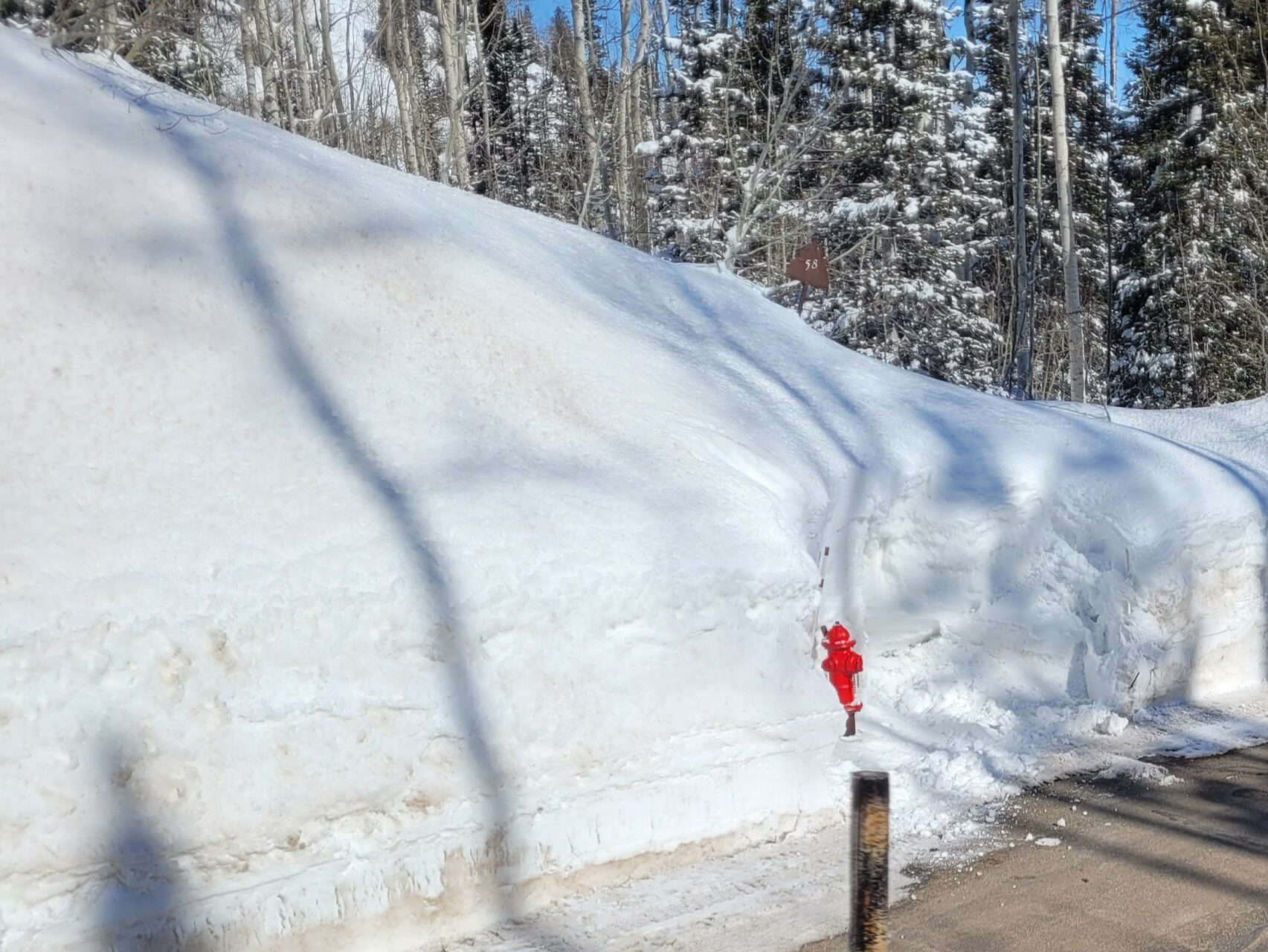
After a lackluster December, Utah’s snowpack level is higher than 100% average because of several storms in January and February, according to the Utah Division of Water Resources.
Utah is only experiencing drought conditions in 5% of the state because of the snowpack and water received both last year and this year. For comparison, 96% of the state was experiencing moderate drought or worse during this time last year, Michael Sanchez, public information officer at the Utah Division of Water Resources, said.
“The current water received will positively impact Utah’s water situation throughout the year, but ongoing conservation efforts are crucial,” Sanchez said. “Most of our reservoirs are close to full and we anticipate many reservoirs will need to release water ahead of the spring runoff that occurs around May.”
According to the Utah Division of Water Resources website, snowpack is measured using the snow water equivalent, which estimates the amount of water that would cover the ground if melted.
Jordan Clayton, a hydrologist and supervisor of the Utah Snow Survey Team, said Utah will likely receive more snow before reaching it’s usual peak near the beginning of April. After April 1, the snowpack typically begins to melt, he said.
“From the first of February until the eighth of February, we jumped 20 percentage points, from 95% (of average snowpack) to 115%, which is a big jump,” he said.
This kind of weather is normal for January and February, Troy Brosten, a hydrologist with the Utah Snow Survey Team, said. He said snowfall typically peaks around March and April. The team is managed by the USDA and maintains snow telemetry stations to collect data.
“I was feeling pretty pessimistic in December, but the January and February storms have restoked my optimism for a good snowpack year — not as good as last year but still pretty darn good,” Brosten said. Utah is currently on track to maintain an average snowpack through April.
Utah received very little snowfall in December, Boston said, but a two-week storm pattern in January rose snowpack levels across the state. Additional storms in early February brought snowpack up past 100% average.
“It’s mid-February so we still have the rest of this month and March to, hopefully, see a continued increase in our snowpack,” Brosten said.
Utah has until roughly April 1, before the snowpack begins to melt, to gain more water via winter storms, Clayton said.

