The towel bar in our master bathroom was falling off the wall. I decided to build one. I was given a woodworking book for Christmas so I found a towel rack that was easy and looked good. So I went and bought the boards and built it. I think it turned out really well and only took about an hour to build.
For my advanced editing course, I have been working with the Wilford Woodruff Papers Foundation to edit the endnotes for a book they are updating for a second edition publication. While I have been volunteering and doing that, I was asked if I would be willing to write articles for them that would be published on their website. I told them I would, it's great experience and a resume builder, and they have given me some to write. I will put them in the blog so I have them for the future.
In 2 Nephi 9, the Book of Mormon prophet Jacob explained the plan of salvation, central to which is the Atonement of Jesus Christ. In verse 7 he called it the “infinite atonement.” The word “infinite” brings up the idea of something that has no limits, that is too great to count, like the sands of the sea—something that can never end.
The opportunity to gain experience from our mistakes, grow closer to God through repentance, and move forward on the covenant path is given to us through the sacrifice, or Atonement, of Jesus Christ. It doesn’t matter to Christ the number of times we make mistakes or if we make the same mistake repeatedly. What matters is that we continue to repent, to learn, and to walk the covenant path back to our Father in Heaven.
Elder David A. Bednar said, “Most of us clearly understand that the Atonement is for sinners. I am not so sure, however, that we know and understand that the Atonement is also for saints—for good men and women who are obedient, worthy, and conscientious and who are striving to become better.”1
I came to understand the truth of Elder Bednar’s words during a challenging time in my life. The trial was not a consequence of my actions but, as I turned to Heavenly Father, I realized that Christ understood how I was feeling because of His infinite Atonement. Christ didn’t live an easy life. He knew disappointment, hardship, rejection, betrayal, and pain. He learned those lessons the way we do—by living life.
Because He lived in the fallen world, as we do, He knows exactly how we feel in our times of trial. He performed the Atonement so that “he may know according to the flesh how to succor his people according to their infirmities” (Alma 7:12).
I have felt His love frequently as I have not only repented of my sins but passed through challenging times. I feel the love of my Savior when I think of His infinite Atonement and the plan of the Father to help us return to Him again. President Wilford Woodruff once said, “I believe that the Almighty knew what He was going to do with this world before He made it.”2 As we come to know more about Christ’s Atonement and apply it in our lives, we can echo the words of Jacob: “O how great the plan of our God!” (2 Nephi 9:13).
Endnotes
1 David A. Bednar, “The Atonement and the Journey of Mortality,” Ensign, April 2012, ChurchofJesusChrist.org.
We have been in our house long enough that we are starting to undo our work from when we moved in. Case in point, we are getting rid of the tree in our backyard. It is just too big and we are afraid the roots are going to start a problem with our foundation. It is a tree that sends out suckers too, so they are all over the backyard and in our lawn. So it was time for the tree to go.
This is what it looked like before it was taken out:
Here is the process:
They cut the tree into firewood for us and then chipped the smaller pieces.
This is what it looked like when they were finished:
I am so sad that we had to take out the tree but it was necessary.
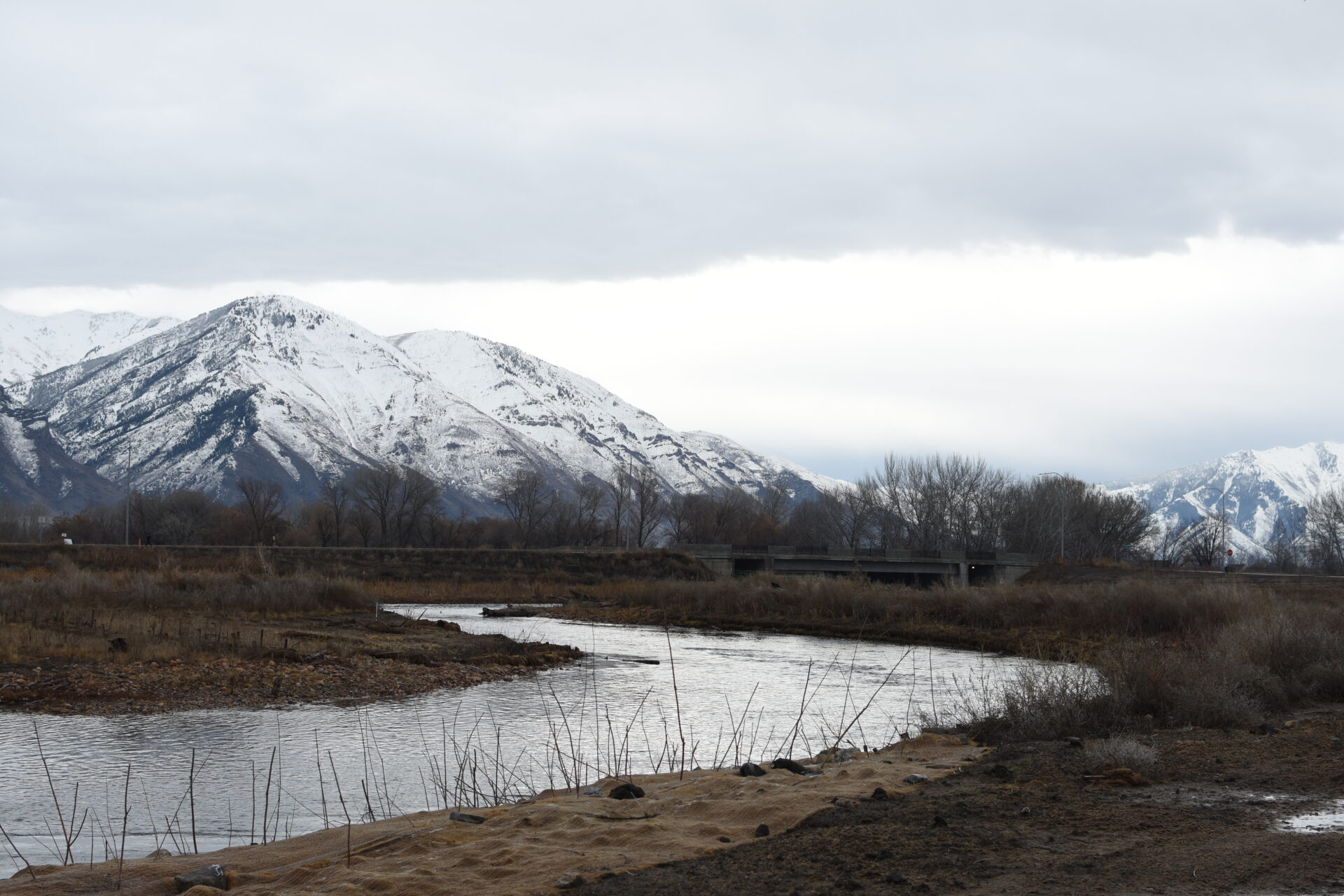
The Provo River Delta area will provide 260 acres of recreation area upon it’s completion. Construction crews have dealt with mud from rain and snowfall but still plan to complete construction by the end of the year. (Ethan Pack)
The Provo River Delta project, a natural restoration project meant to protect native fish and increase recreation opportunities at Utah Lake, is slated for completion in late 2024.
The project remains on schedule despite early-year rain and snow, Mike Mills, executive director of the Utah Reclamation Mitigation and Conservation Commission, said. According to its website, the commission is a government entity that provides funding for ecological restoration projects in Utah.
“We have a schedule, and even with our delays that we built into it, we’re looking at probably early November to be able to have kind of a grand opening,” Mills said.
As of February 2024, restoration of the delta area was completed and now those involved with the project are developing the landscaping and recreation area, Mills said.
The Provo River Delta is located on roughly 260 acres of farmland-turned-wetland between Utah Lake State Park and Provo High School. The project will help recover the June Sucker, a threatened fish native to Utah Lake.
The Utah Mitigation Commission works with agencies such as the June Sucker Recovery Implementation Program to manage conservation efforts, according to the program’s website.
The June Sucker was listed as an endangered species in April 1986 because of urban growth, predation from non-native species like carp and water development projects. However, captive breeding efforts and large-scale efforts, such as the delta project and Hobble Creek restoration, downgraded the species to threatened in 2020, according to the June Sucker Recovery Implementation Program.
“The delta really represents our last bottleneck that we need to overcome to [help] the species hopefully recover,” Russ Franklin, assistant director of the June Sucker Recovery Implementation Program, said. “Our greatest challenge right now is what they call ‘natural recruitment.’”
Until recently, the June Sucker has lacked natural cover because the Provo river is so channelized, Franklin said.
June Suckers swim up the Provo river to spawn and baby larval fish float down the river into Utah Lake. The larval fish are often eaten by invasive fish species such as carp, resulting in a declining population. According to Franklin, the delta should help larval fish naturally reproduce by covering them from predator fish.
“We’re doing the best that we can to try to restore vegetation so that there will be a natural balance between those juvenile June Suckers up until the time that they get about (a foot and a half long) where they can go feed out in the open water and they no longer fit down most fishes gullets,” Mark Belk, BYU biology professor, said about the project.
Captive breeding efforts should be supplemented by natural population growth within a few years, resulting in a stable population of June Suckers, Belk said.
The project will also provide several recreational options including fishing, non-motorized boating and a walking and biking path, Mills said.
“For your average person, this is going to be a recreation destination that will really become another access point for Utah Lake. A place to see birds, walk your dog, go kayaking, all kinds of things,” Mills said. “And that’s cool when you can do something that benefits multiple aspects of society.”’
The natural delta area construction has already been completed and construction crews are working on landscaping and recreation areas, according to Mills. Once complete, the area will get a grand opening and be considered a public park.
Bryan knows his electric car. He knows how to nurse it to get the maximum amount of miles from each charge. He knows how much to push it before it really needs a charge (kind of like how you push a gas car to go as far as you can when the gas light is on). I don't know these things and I get pretty nervous when we are driving and there aren't many miles left. We were driving back from the temple open house when his car gave a warning that the power was almost out and we weren't home! We still had a mile to go and I was nervous. It was on a hill so the car would use more electricity and I didn't want to push a car up a hill in a dress.
Bryan hadn't ever had it get that low on charge before so he wasn't sure what was going to happen but he told me he wasn't nervous at all. Not even when we saw this...
Bryan and I got tickets to the Red Cliff's Temple Open House on a Thursday. This was a great choice because there wasn't ANYONE there! We got to walk as slowly as we wanted and enjoy being there. It is a beautiful temple. I wasn't too sure about the purple and green but it is growing on me. I loved the celestial room with all the crystal and silver. It was a beautiful day to enjoy walking through the newest temple of the Church. If you want to see pictures of the inside, including the gorgeous celestial room, you can click here.
For a short time, St. George was home to the oldest temple and the newest temple. That's a pretty cool distinction.
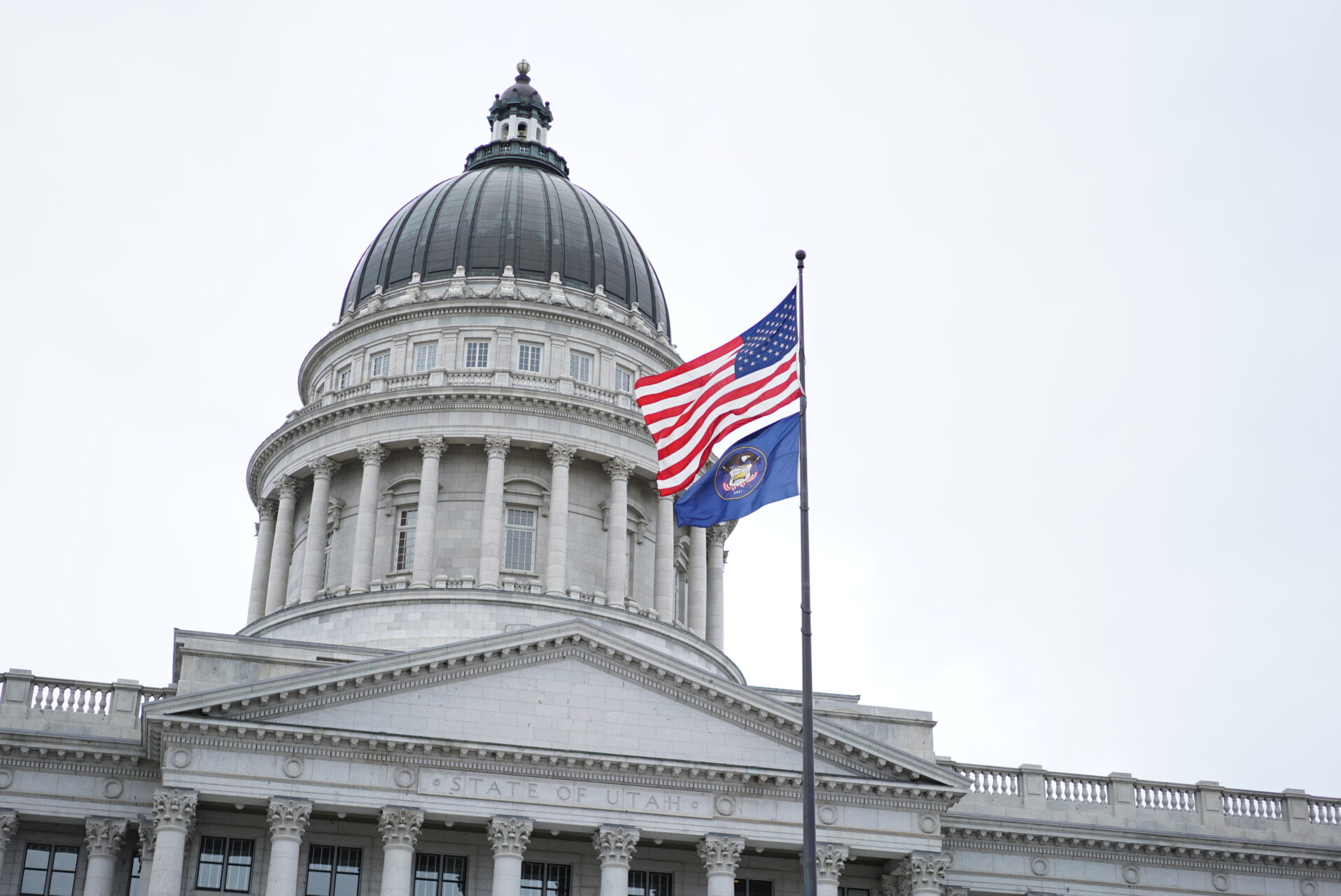
The 2024 General Session of the Utah State Legislature began Jan. 16 and will end March 1. If House Bill 11 passes both the House and Senate and is signed by Governor Cox, it will go into effect May 1. (Ethan Pack)
A bill limiting the amount of non-functional grass used for state and municipal landscaping has passed the Utah House and is now being debated in the Senate.
Rep. Doug Owens sponsored the bill, titled H.B. 11 Water Efficient Landscaping Requirements. The bill would affect new state and local government landscaping in the Great Salt Lake Basin, Owens said in a House Natural Resources, Agriculture, and Environment Committee hearing on Jan. 18.
“It would apply up and down the line to government construction: everything from a state building to a county building to a city building to a school and to a road,” Owens said.
The bill states the limit on non-functional turf would be 20% or less of the total landscaped area. It would not affect active turf, like is used at parks, playgrounds and cemeteries, Owens said.
“You can still have all the functional turf you want … but you’re supposed to limit the use, this bill says, if you’re just doing landscape for aesthetic purposes,” he said.
The bill passed several House and Senate meetings in 2022, but failed in the Senate on the last day, according to Owens. The bill’s scope was much wider but was narrowed to the Great Salt Lake Basin this year.
“I know I’m preaching a little to the choir here, but we know conservation is critical to Utah’s water future,” Candice Hasenyager, director of the Utah Division of Water Resources, said at the House committee hearing. “How we grow matters and changing how we grow to be more waterwise and use our water efficiently is super important.”
Hasenyager later said roughly 60% of home water usage in Utah goes towards watering lawns. Setting a limit to how much lawn can be used in government landscaping sets an example of water-wise development for the rest of the state, she said.
Citizens and lobbyists at both the House committee meeting and the Senate Business and Labor Committee meeting shared their support or opposition to H.B.11. The Utah Farm Bureau’s House of Delegates debated about and voted on several policies relating to water use for turfgrass at their most recent meeting, according to Terry Camp, vice president of Public Policy with the Federation.
“Consistent with our policies, Utah Farm Bureau actively supports efforts among all stakeholders to enhance Great Salt Lake. We support marketing and wise use of drought and heat-tolerant varieties of turfgrass and other ornamental plants, and we oppose limits on the use of turfgrass and other ornamental plants in public or private spaces,” Camp said at the Utah Senate hearing.
The bill has been read twice in the Utah Senate and was voted on Feb. 1 to be read a third time. If passed in the Senate, H.B. 11 would go into effect on May 1.


.jpeg)
.jpeg)
.jpeg)
.jpeg)